LLM 推理基础:矩阵乘法并行化
4 min
本文简单介绍 GEMM 运算的几种常见的并行计算方式。
在分布式计算场景下,什么时候通信是必须的
对于两个矩阵 和 ,矩阵计算可以表示为
我们可以看到有两种拆分方式: (1) 和 维度的拆分,对应拆分 和 的计算,每个 rank 负责一部分 。计算是相互独立的,除非要重建完整的矩阵,通信是没有必要的 (2) 维度的拆分,这意味着每个 rank 分别负责所有元素的一部分的求和计算。此时一定需要聚合通信,不然的话矩阵的计算结果就不正确。
第二种情况推导:假设设备为 ,分到一部分的
结论是在矩阵乘法时,当拆分求和维时就必须需要通信。
两个矩阵乘法
考虑我们需要做以下矩阵乘法的场景:
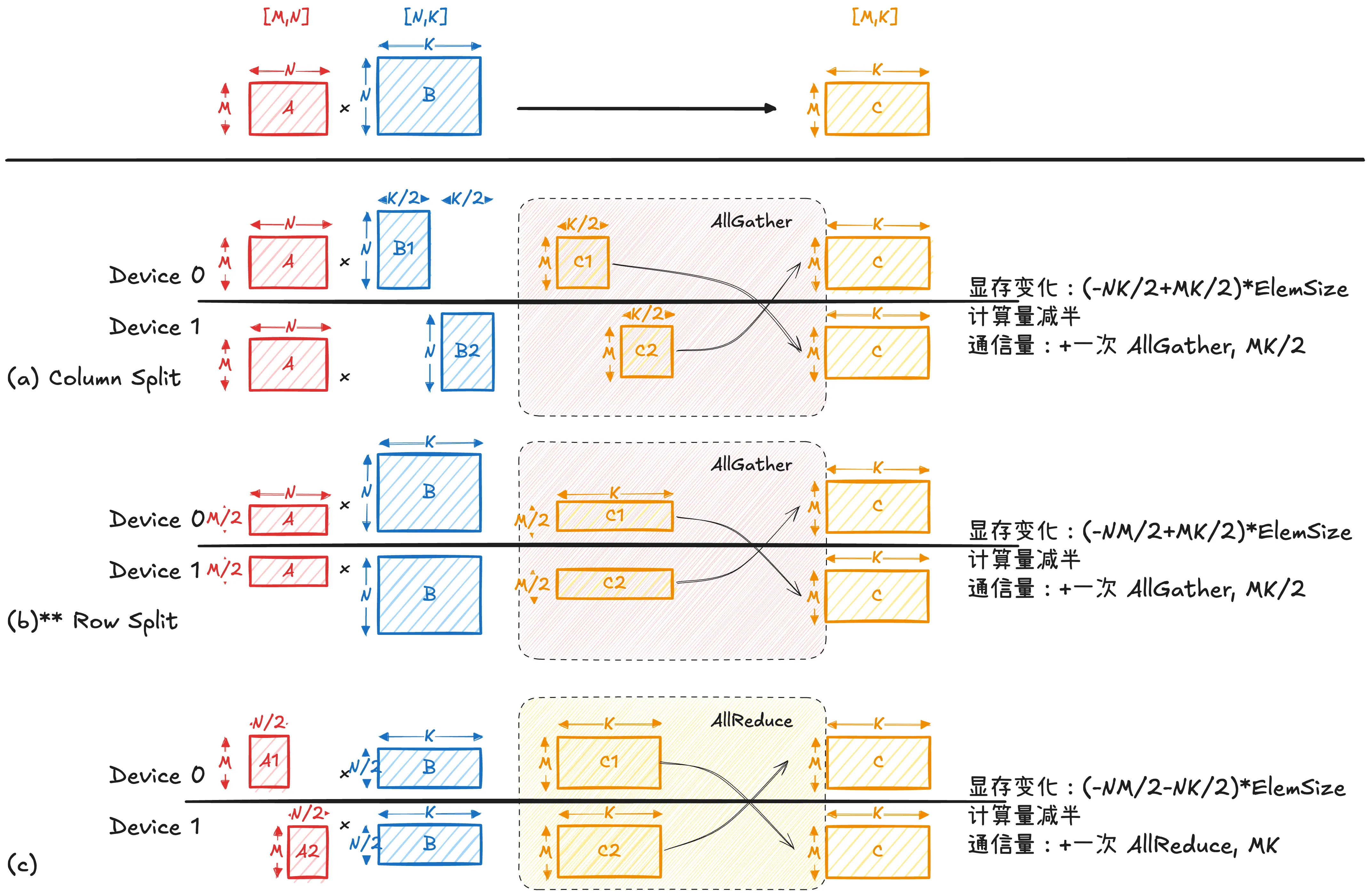
下图 (a)–(c) 展示了三种典型的矩阵切分方式。其核心区别在于:是否对乘法中的求和维度(即 维)进行切分。
- (a) 列切 B:每个设备负责输出矩阵 C 的一部分列,计算彼此独立,无需通信,但为了得到完整的输出矩阵需要进行一次 AllGather。
- (b) 行切 A:每个设备负责输出矩阵 C 的一部分行,同样无需通信,但为了得到完整的输出矩阵需要进行一次 AllGather。该方式在神经网络推理中最为常见(例如 activation 按 batch 或 token 维切分)。
- (c) 列切 A 且行切 B:等价于对乘法中的求和维度进行切分,每个设备仅计算部分乘加结果(partial sum),最终必须需要通过 AllReduce 完成结果合并。这种方式具有更高的并行粒度,但会引入额外通信开销。
参考代码实现
# Code for (a)
import numpy as np
M, N, K = 4, 16, 8

A = np.random.randint(0, 10, size=(M, N))
B = np.random.randint(0, 10, size=(N, K))
print("Matrix A shape:", A.shape)
print("Matrix B shape:", B.shape)

num_splits = 4
assert K % num_splits == 0, "K must be divisible by num_splits"
B_splits = np.split(B, num_splits, axis=1)
for i, B_split in enumerate(B_splits):
    print(f"Split {i} shape: {B_split.shape}")

# Distributed computation of A @ B using splits of B
local_results = [A @ B_split for B_split in B_splits]
for i, local_result in enumerate(local_results):
    print(f"Local result {i} shape: {local_result.shape}")

# Assemble the final result: AllGather
C_final = np.hstack(local_results)
# equivalent to C_final = np.concatenate(local_results, axis=1)
print("Final result shape:", C_final.shape)
三个矩阵乘法
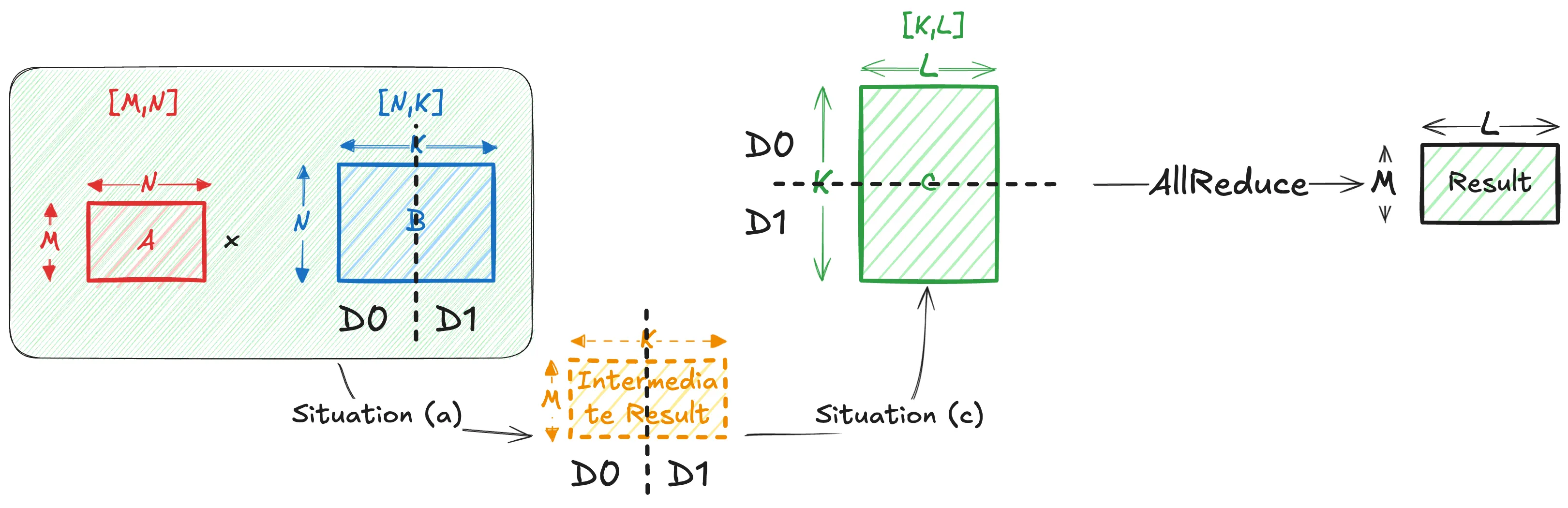
现在考虑到我们需要做三个矩阵乘法,即:
常见的方法是 列切 B + 行切 C。
- 第一步 计算类似上一小节 (a),得到列切的输出
- 再运用上一小节 (c),与行切 计算,再经过 AllReduce 得到完整输出